
How On-Page SEO Helps Real Estate Brands Win Buyers
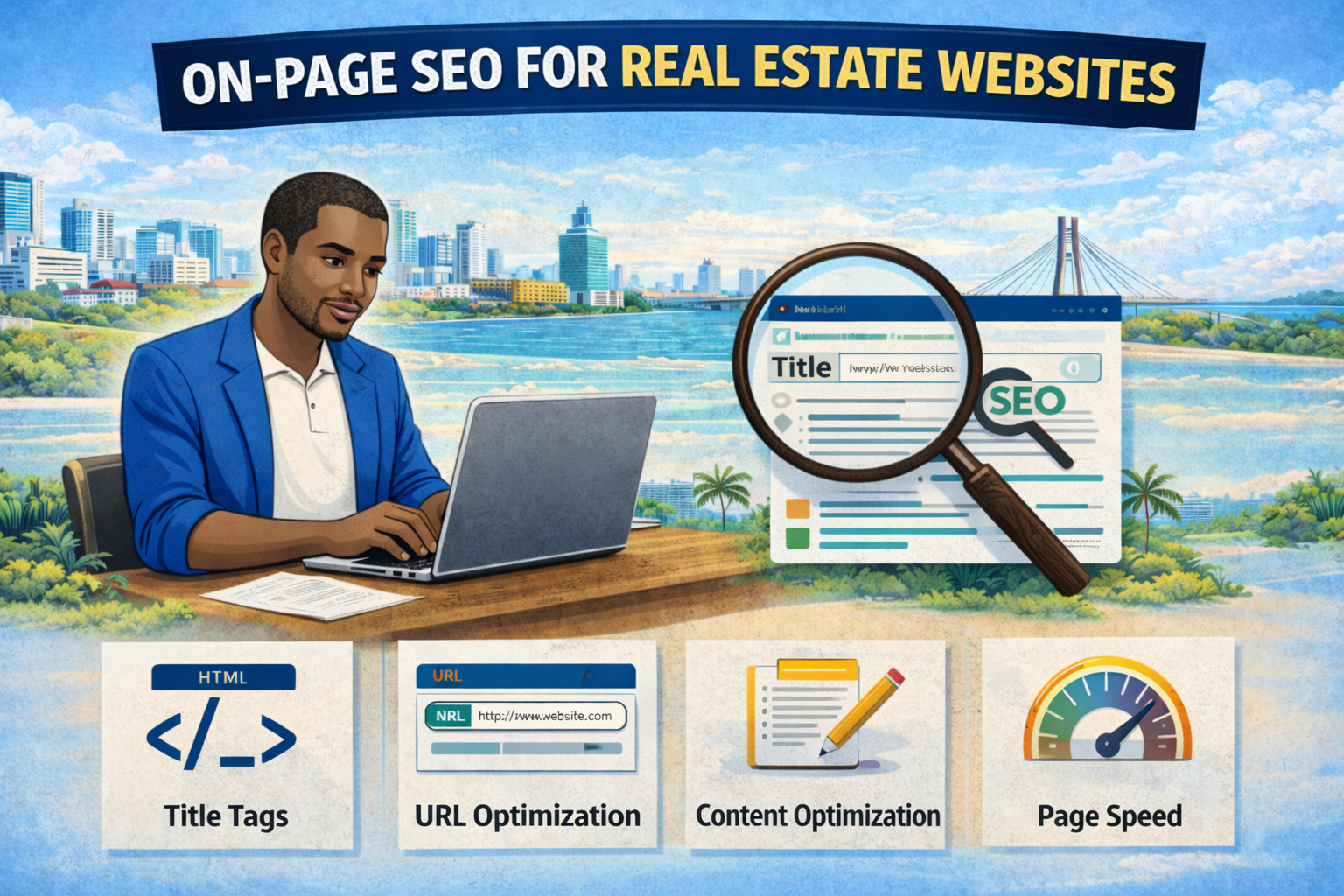
When real estate businesses fail to win enough buyers on Google, they think SEO is “hard.”
No, it’s not, at least for professionals.
Google’s standard real estate SEO strategy is not about ticking boxes, It is about structuring trust, location relevance, and buying signals in a way that matches how people actually search for property.
This is done through a vital area of SEO known as on-page SEO. The on- page SEO involves optimisation activities that determine win or lose.
So, if you are a real estate business owner or developer, this is what professional on-page SEO really looks like.
Why On-Page SEO Works Differently for Property Websites
Property search behavior is high-risk and intent-driven. Buyers are not browsing casually, they are validating price, location, credibility, and availability.
That is why property websites are evaluated heavily on:
- Page intent clarity
- Location signals
- Content depth around property decisions
- Trust and authority indicators
- User engagement behavior
These should be foundational tips for every real estate website optimization.
Search Intent Mapping Is the Foundation (Not Keywords)
High-performing property pages are built around search intent layers, not just keywords.
A professional on-page SEO structure separates pages by intent:
- Commercial intent (properties for sale, rent, lease)
- Informational intent (area guides, price insights, buying process)
- Navigational intent (brand, developer, estate name)
- Transactional intent (inspection booking, contact, enquiry)
Here is a visual resource from Yoast SEO on search intent.
credit: Yoast
Each page must satisfy one dominant intent clearly. Mixing intents weakens rankings and conversions.
Title Tags That Attract Buyers, Not Just Clicks
After analysing several real estate websites, I discovered a similar pattern in their title tag.
Most real estate title tags are either:
- Overstuffed with keywords, or
- Too vague to trigger buyer confidence
High-level property SEO titles balance relevance, clarity, and authority.
A strong title:
- Mentions the property type
- Includes the exact location
- Signals market understanding
Example structure:
Property Type + Location + Buyer Value Signal
This aligns with how Google evaluates commercial search results for property.
Headers That Guide Both Google and Buyers
On property websites, headers are not decorative. They are content signposts.
Expert-level H1–H3 structure:
- Confirms page intent immediately
- Breaks complex property information into scannable decisions
- Reinforces topical authority for Google
Each section should answer a real buyer question:
- Pricing
- Location advantages
- Property features
- Investment potential
- Inspection process
Easy skimming and understanding increase dwell time and relevance scoring.
Location SEO Goes Beyond City Names
Simply adding a city name is not local SEO.
Advanced on-page property SEO uses:
- Area-specific language
- Landmark references
- Estate names
- Local buyer concerns
- Infrastructure and lifestyle context
Google rewards pages that sound local, not pages that only mention a location.
This is critical for ranking in competitive real estate markets.
Property Content Must Show Market Understanding
Having thin property descriptions shows limited experience and expertise, and they do not rank, nor do they convert.
Professional on-page SEO content:
- Explains why the property is valuable
- Addresses buyer objections
- Shows understanding of the local market
- Uses natural, experience-based language
This is where EEAT becomes visible to both Google and human readers.
Internal Linking as a Buyer Journey System
I’ve seen most websites link randomly.
Expert SEO links intentionally:
- Property pages → area guides
- Area guides → similar listings
- Blogs → commercial pages
- Investment content → enquiry pages
This builds:
- Strong topical clusters
- Clear conversion paths
- Better crawl efficiency
Google sees this as a structured authority site, not a collection of pages.
Image SEO That Supports Property Discovery
Property websites are image-heavy, yet image SEO is often ignored.
High-level image optimization includes:
- Descriptive filenames
- Contextual alt text
- Image placement near relevant content
- Fast loading without quality loss
This improves:
- Page relevance
- Image search visibility
- User engagement
Technical Elements That Directly Affect Rankings
On-page SEO extends beyond content.
Professional property SEO also ensures:
- Clean URLs
- Schema for listings, organizations, and locations
- Mobile-first layout
- Fast page speed
- Clear call-to-action placement
These elements directly influence how Google evaluates commercial property pages.
Why Most Property Websites Still Don’t Rank
Because they:
- Follow generic SEO templates
- Ignore buyer psychology
- Lack market-specific content
- Do not structure pages for intent
- Fail to demonstrate authority
On-page SEO for property websites requires a deep understanding of the industry, not just surface-level optimization.
What This Means for Real Estate Business Owners
If your website is not:
- Ranking for buyer-intent keywords
- Attracting qualified enquiries
- Converting organic traffic into leads
Then your on-page SEO is failing.
Real estate SEO is not about traffic.
It is about visibility at the moment of decision.
Final Thought
On-page SEO for property websites is a strategic system, not a checklist.
When done correctly, it positions your brand as:
- Trustworthy
- Market-aware
- Buyer-focused
And that is what Google and serious buyers reward.
If you would like to review your website’s on-page optimization, I’m here to help